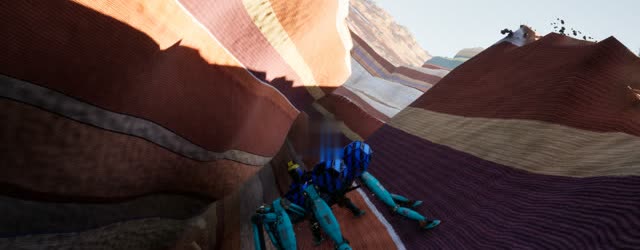
Climb anything
Walls and ceilings are routes. Spider mechs run up sheer canyon rock, hang from overhangs and drop onto the fight from above. Every fight is vertical.

About the game
Climb canyon walls and ceilings, shoot the legs off your enemies and blow them into scrap. Every mech grows from its own genome: eight kinds of machine, no two alike.
Walls and ceilings are routes. Spider mechs run up sheer canyon rock, hang from overhangs and drop onto the fight from above. Every fight is vertical.
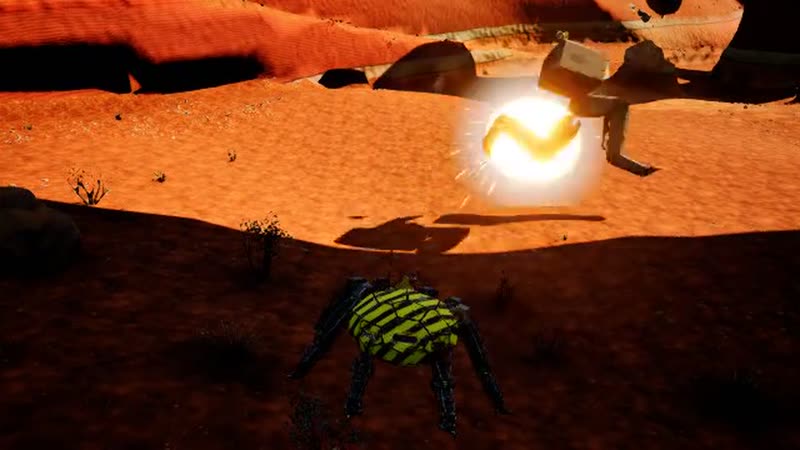
Shoot a leg off and it falls away, and the mech fights on with the legs it has left. Lose the body and you explode into scrap. Haulers carry a repair arm that welds their hull back together between hits, but a lost leg stays lost.
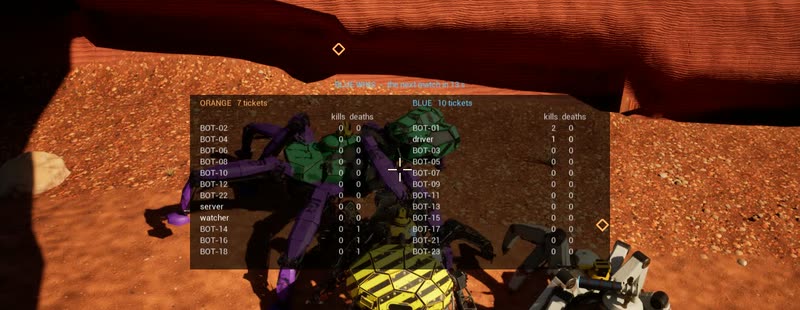
Two teams, orange and blue, fight for tickets across a canyon of cliffs, arches, tunnels and hoodoos. Bots fill every match, so there's always a fight, whether you host your own game, join a friend's or play alone.
Guns and powers
Guns are found in the canyon, built from parts and made by rival makers. Every mech also carries a power, and up close it can bite, strike and slam.
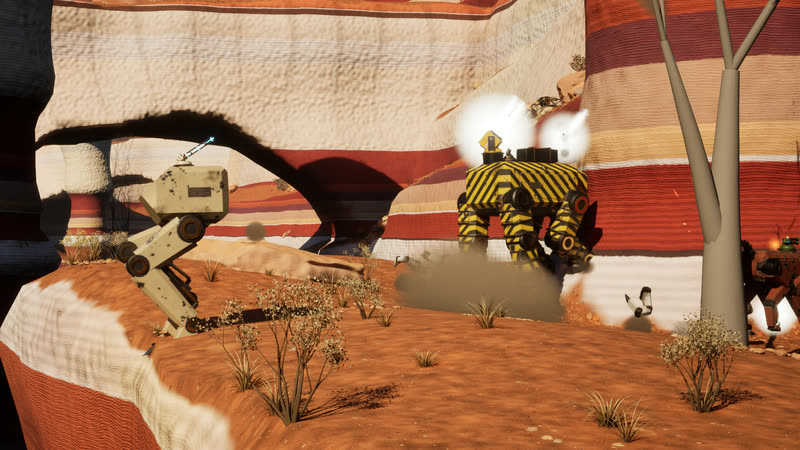
Every gun is assembled from procedurally generated parts: receiver, barrel, feed and sight, each one changing how it looks and fires. Autocannons, flak, railguns, mortars and rockets come from three rival makers with their own quirks: Kessler's heavy rounds knock you back, Volt & Vane arcs shocks between targets, and Brood Arms leaves acid.
Rarities run from common to legendary, upgrades stack on top, and you swap guns with what you find in the canyon.
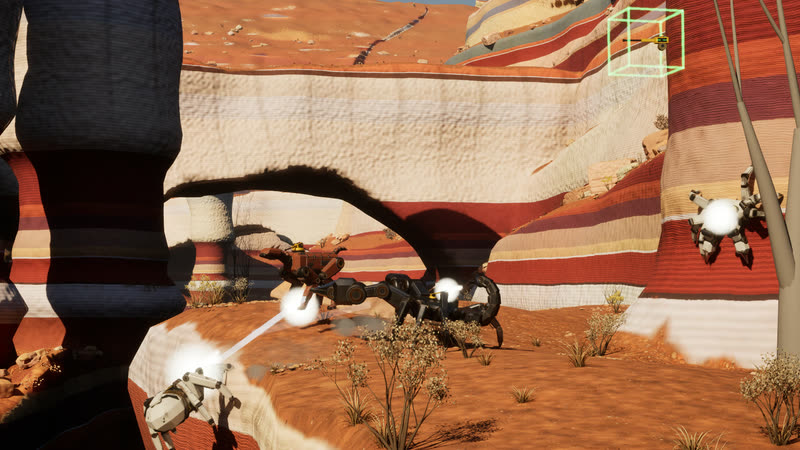
Web an enemy, pounce on it, kick into overdrive, or turn chameleon against the rock. Zip across gaps on silk, bite and strike up close, or drop from above in a piledriver slam that stuns everything it catches.
Guns and powers are data, so mods can add new ones.
Procedural parts
Every mech is built from dozens of procedurally generated parts, made for that mech alone. Its legs, joints, feet, hull and head each get their own shape, size and paint, down to the bolts. Every one you meet is a machine nobody has fielded before.
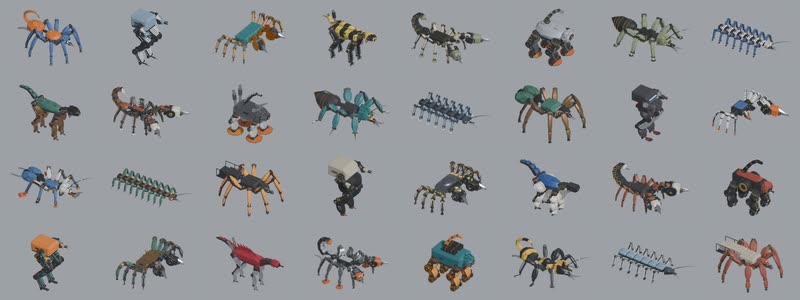
Spiders, crabs, scorpions, ants, centipedes, hounds, haulers and walkers. Spiders climb, walkers stride, centipedes ripple across the rock.
Every leg segment, joint, foot, hull and head is generated for the mech it belongs to, so no two machines share a silhouette.
Each mech rolls a palette and a livery (accented, banded, split, two-tone or inverse), and every part takes its own tone.
Made to be remade
The mechs, their parts and paint, and the maps they fight on are all generated, and the tools that make them are coming to you. Images show the game in development.
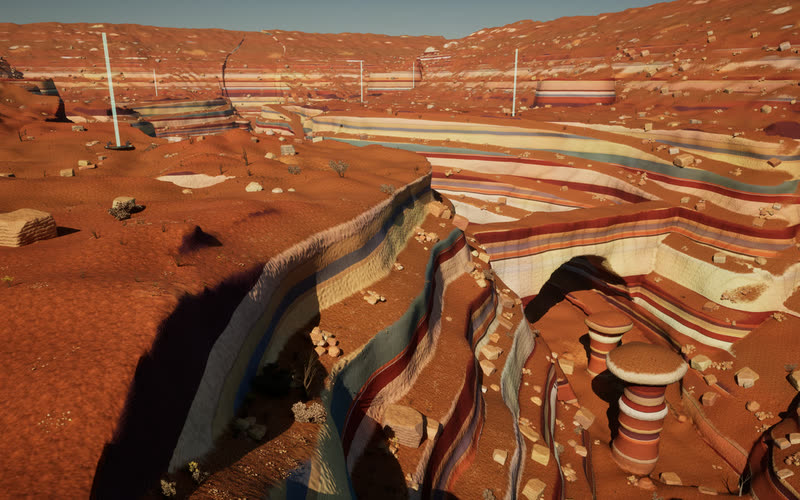
Our terrain generation builds whole map layouts: winding canyon floors between ledged walls, hoodoos, side canyons, tunnels, natural bridges and caves, dressed with rocks and plants.
Its editor lets us turn out new maps at light speed. Mod tools are coming soon.
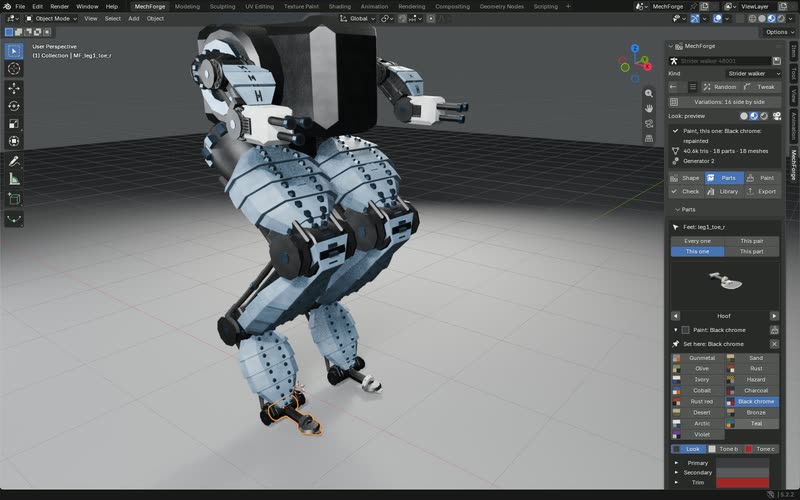
We built an editor to put our procedural engine through its paces, and it's the same editor modders will get. Every part, shape and colour setting we use is open to you: no hidden settings, and no code to write.
Mods are made of data and checked before every match, so they're safe to share. Above: the editor repainting a single foot.
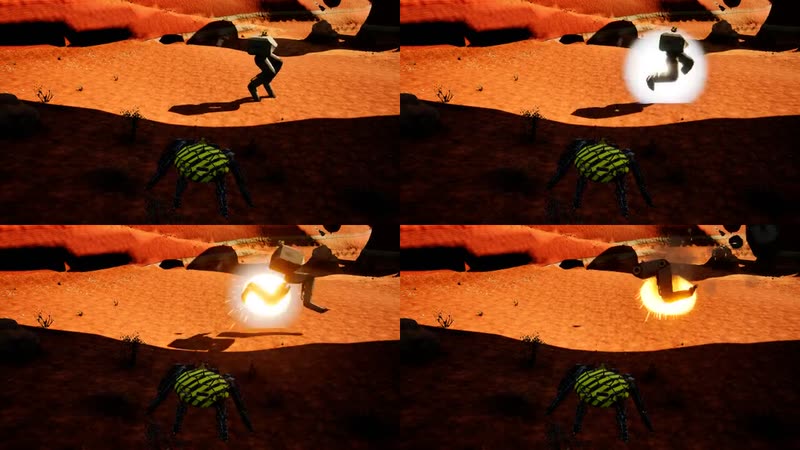
Every leg and every step is procedural. Blow a leg off and the mech limps along on the ones it has left. Do enough damage and parts fly!
Physical damage can be repaired: haulers weld their hulls back together between hits.
Host local or public multiplayer with up to 100+ players per match. Bots fill both teams, so every fight is packed.
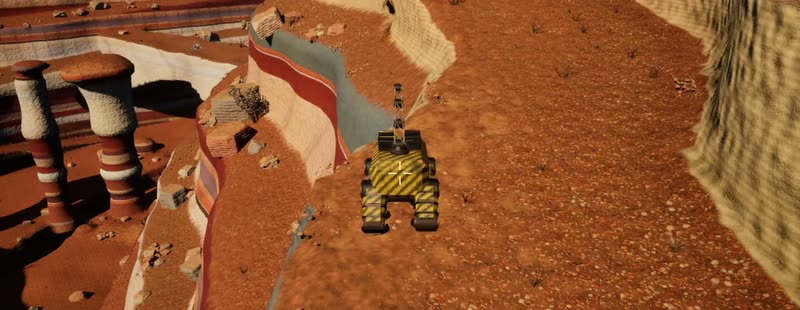
Above: a hauler, too heavy to climb, takes a ledge road up to the rim.
Transparency
We don't use AI-generated art or sound in our game in any way. All models, mechs and systems come from a complex procedural math engine we developed in house.
We build our mechs with math!
We do use AI coding frameworks. We work on our codebase with AI code assistants from major providers and with local, self-hosted models.
The Steam page is coming soon. Leave your email and we'll tell you the day it opens.